Fambase: Live & Group Chat
- 4.3
- Rating
- 1.00M
- Installs
- Free
- Price

 Analysis by App-foxy
I approached Fambase: Live & Group Chat as a practical question rather than a quick download: what happens when I need a private place for a community, a small group, or an ongoing conversation that feels more focused than a normal social feed? The answer is fairly appealing, but it depends heavily on what kind of privacy and group interaction you expect. Fambase is a free lifestyle app from Nextwave Media Holdings Limited, built around private community messaging rather than public posting.
My first impression is that it sits somewhere between a group messenger and a community hub. That makes it useful for people who want a shared space with a clear audience, while also making it less suitable for anyone looking for a simple one-to-one chat tool. The app has a mature seventeen-plus rating, so I would not treat it as a general family messenger or hand it to younger users without considering the kind of communities they may encounter.
From needing a private space to getting a usable group conversation
I start with the practical question of whether a private community solves a real communication problem, rather than adding another inbox to check. A useful test is to name one recurring conversation that currently gets lost among personal chats; if you can, the next step is choosing a purpose and a group size that keep the space manageable.
You May Also Like

 Blood Strike: 2.5 Anniversary
Blood Strike’s Loadouts Turn Every Drop Into a Tactical Gamble
A close look at Blood Strike’s custom loadouts: how fast access to signature weapons reshapes its battle royale rhythm, rewards preparation, and narrows the gap between fights.

 Pandora - Music & Podcasts
Pandora’s Music Is Easy to Start, but Harder to Recover
Pandora’s strength is its low-effort path from a seed to a station. Its weak spot is how much confidence it asks you to place in connection, setup, and quiet recovery.

 8 Ball Pool
 Is Built on Rivalries, Rematches, and Routine
A close look at the rivalries, rematches, shared routines, and unanswered safety questions that turn a quick pool match into a persistent mobile community.

 Samsung Music
’s Quiet Strength Is Playing What You Already Own
Its reach comes less from spectacle than from dependable access to a personal library. That simplicity is both the app’s strongest retention engine and its ceiling.

 AccuWeather: Weather Radar
AccuWeather Review: A Quick, Clear Forecast for Everyday Decisions
For everyday plans, the best forecast is the one you can understand quickly. AccuWeather makes rain timing, radar, and local conditions easy to act on, with a few trade-offs.

 Hill Climb Racing
Why Hill Climb Racing Still Turns Crashes Into One More Run
A tiny car, a bumpy hill and one more upgrade: Hill Climb Racing keeps resurfacing because its simple chaos makes every near-miss feel personal.
More From Our News Desk



Starting with the right expectation
The most important decision happens before creating or joining anything: deciding whether you need a private community or merely a conventional chat thread. If your goal is to send a quick message to one person, the usual messaging apps are probably faster. Fambase makes more sense when the conversation has a group identity, recurring participants, or a shared purpose that deserves its own space.
I can imagine using it for a small interest group, a creator-led community, or friends who want a dedicated place away from their everyday personal chats. The private-community focus gives the conversation a stronger sense of separation. Instead of mixing event planning, family messages, work notes, and hobby discussions in one inbox, I can keep a particular group’s activity together.
That separation is also the first trade-off. A separate community only helps if people actually agree to use it. Asking everyone to install another app creates a handoff before the conversation even begins. For a group that already communicates comfortably elsewhere, Fambase needs to offer a clear reason to move rather than simply adding another notification source.
Setting up the conversation around a purpose
My recommended workflow would be to define the group’s purpose first, then invite only the people who need to participate. That sounds obvious, but it matters more in a private community app than in a casual group chat. A focused name and a clear opening message can prevent the space from turning into an unstructured stream where useful information disappears under unrelated replies.
For example, imagine a group organizing a weekend activity. One person starts the community, another shares the practical details, and the rest confirm availability or ask questions. The useful outcome is not simply that messages were exchanged; it is that everyone leaves with the same understanding of what is happening. Fambase is most convincing when the community itself is the destination, not just a temporary place to pass around one announcement.
I would also keep the first conversation compact. Bringing in every possible participant at once can make a new space feel noisy and difficult to follow. A smaller initial group allows the purpose and tone to settle before more people arrive. This is one of the less obvious strengths of a private community approach: the organizer can think about the audience instead of treating the chat as an open noticeboard.
Moving from individual input to shared context
Once the space exists, the flow depends on how well individual messages become shared context. A useful community is not just a collection of opinions. It needs a rhythm: someone introduces the topic, others add information, and the group gradually reaches a practical result. In my experience, Fambase is better suited to that continuing exchange than to a single isolated message.
A realistic example would be a local hobby group deciding which activity to arrange. The organizer can explain the idea, members can respond with preferences, and a final message can summarize the agreed plan. The handoff from organizer to participants is straightforward in principle, but the quality of the result still depends on people reading the full conversation and responding clearly.
This is where I would avoid treating the app as a replacement for planning tools. A community messenger can collect decisions, but it may not provide the same structure as a dedicated calendar, task manager, or document workspace. If the group needs formal assignments, detailed records, or a long-term archive, I would pair the conversation with another tool rather than expect the chat alone to manage everything.
Handling handoffs between members
Handoffs are the real test of any group app. One person starts the discussion, another takes responsibility, and someone else may need to communicate the outcome to people who were not present. Fambase’s private-community format can make the central conversation easier to locate, but it does not automatically solve the human problem of ownership.
I would use a simple habit: whenever responsibility changes hands, the new person should restate the current position in a short message. That prevents the next participant from having to reconstruct the decision from a long thread. It is especially useful when members join at different times or check messages only occasionally.
This workflow also highlights why a community should have a clear boundary. If the group includes too many loosely connected people, every handoff becomes harder. Questions may be repeated, decisions may split across several replies, and the private space can feel just as chaotic as a public social feed. Fambase helps most when the organizer actively keeps the conversation focused.
What the recipient experiences
From the participant’s side, the main benefit is having a recognizable place for the group’s conversation. Instead of wondering which personal chat contains the latest update, the member can return to the community associated with that topic. That is a meaningful improvement for recurring discussions, particularly when the same people need to exchange messages over time.
There is a social advantage too. A private community can feel more intentional than commenting beneath a public post. Members know they are speaking to a defined audience, which may encourage more relevant replies. At the same time, that sense of closeness can make moderation and boundaries more important. People should be comfortable with who is included and with the mature audience positioning of the app.
I would not recommend joining simply because a group is present there. Before participating, I would consider whether the community’s purpose is clear, whether the members are people I trust, and whether I am prepared to manage another stream of messages. The app can organize a conversation, but it cannot guarantee that every community will be well run.
Getting from conversation to outcome
The best result is a decision, a shared update, or a continuing connection that would be awkward to maintain through scattered individual messages. In the weekend-planning example, the outcome might be that everyone knows the arrangement and the organizer knows who is participating. In a hobby community, the result may simply be an ongoing exchange of useful ideas among people with a common interest.
That makes Fambase more than a basic inbox for the right audience. Its value comes from giving a group a home. I would judge success by whether I can return later and immediately understand what the community is for, who is involved, and what has already been decided. If the answer is yes, the app has done something worthwhile even without replacing every other communication tool.
The app is free to install, which lowers the barrier for trying it with a small group. However, in-app purchases range from around five dollars to as much as two hundred fifty dollars per item. That is important for anyone planning to spend money inside the app: I would review each purchase carefully and agree on expectations before treating paid options as part of a group workflow.
Where the workflow breaks down
The first weak point is adoption. A private community is only useful when the people who matter are willing to participate. If half the group remains on another messenger, the organizer may end up copying updates between services. That creates duplicated effort and increases the chance that someone receives an outdated version of the plan.
The second problem is message overload. Fambase can give a community a dedicated home, but a dedicated home can still become noisy. If every thought receives a separate message, important information becomes difficult to find. I would encourage short summaries, clear decisions, and occasional cleanup of the conversation’s focus. Without those habits, the app’s structure cannot compensate for poor group communication.
The third limitation is audience fit. The mature seventeen-plus rating means I would be cautious about using it for a mixed-age community, a school-related group, or a family space that needs a clearly child-friendly environment. Adults looking for private social interaction may find the positioning more appropriate, but parents should not assume that a private label makes every community suitable for younger users.
There is also a practical distinction between privacy and control. A private community can limit the intended audience, but that does not mean every participant will communicate responsibly. I would still think carefully before sharing sensitive personal information, and I would avoid using a community messenger as the sole place for critical records or confidential documents.
How it compares with familiar alternatives
Compared with a standard one-to-one messenger, Fambase is more community-oriented. A conventional messenger is usually the better choice when speed, broad adoption, and direct contact matter most. If I only need to ask a friend a question or send a quick update, adding a private community layer would feel unnecessary.
Compared with a public social network, Fambase offers a more contained setting for people who already share a connection or interest. Public platforms are stronger for discovery and reaching strangers, while a private community is better when the audience should remain defined. I would choose Fambase for ongoing group interaction, not for building a public following from scratch.
Compared with a workplace collaboration service, it is less naturally associated with formal projects and structured records. A work platform may be preferable when the group needs assigned tasks, searchable files, administrative controls, or a documented workflow. Fambase feels more personal and community-focused, which is precisely its appeal for social groups but also its boundary for professional operations.
Who should try it, and who should skip it?
I think Fambase is worth trying if you want a dedicated private space for a recurring group and the other members are ready to use it consistently. It may suit adults organizing an interest community, maintaining a close social group, or creating a more focused alternative to a public feed. The free entry point makes a small trial relatively easy, provided everyone understands the audience and purchase model.
I would skip it if you need a universally adopted messenger, a formal project-management system, or a child-oriented communication environment. I would also hesitate if the group has no clear reason to leave its current app. A new platform should reduce friction, not create another place where people have to check for updates.
My final take after following the full flow
Fambase works best when the journey is deliberate: identify a group need, create a focused private space, bring in the right people, keep handoffs clear, and finish discussions with an understandable result. That is a stronger use case than treating it as another general-purpose chat app.
Its rating sits at a 4.3 average from around 2.8 thousand ratings, and the app has passed over one million installs, which suggests that the private-community idea has found a real audience. The current version is 6.8.3 and supports devices running Android 6.0 or later, so compatibility is broad for many Android users.
My recommendation is positive but selective. I would suggest it to an adult group that values a separate community home and is willing to establish simple communication habits. I would not present it as a universal replacement for every messenger or collaboration tool. The deciding question is whether your group needs a community, not merely another chat window.
For that specific need, Fambase: Live & Group Chat has a clear purpose and a useful workflow. Its success depends less on flashy extras and more on whether the people using it keep the space focused, respect its mature audience, and turn messages into shared outcomes.
FAQs for Fambase: Live & Group Chat
01What is Fambase: Live & Group Chat used for?
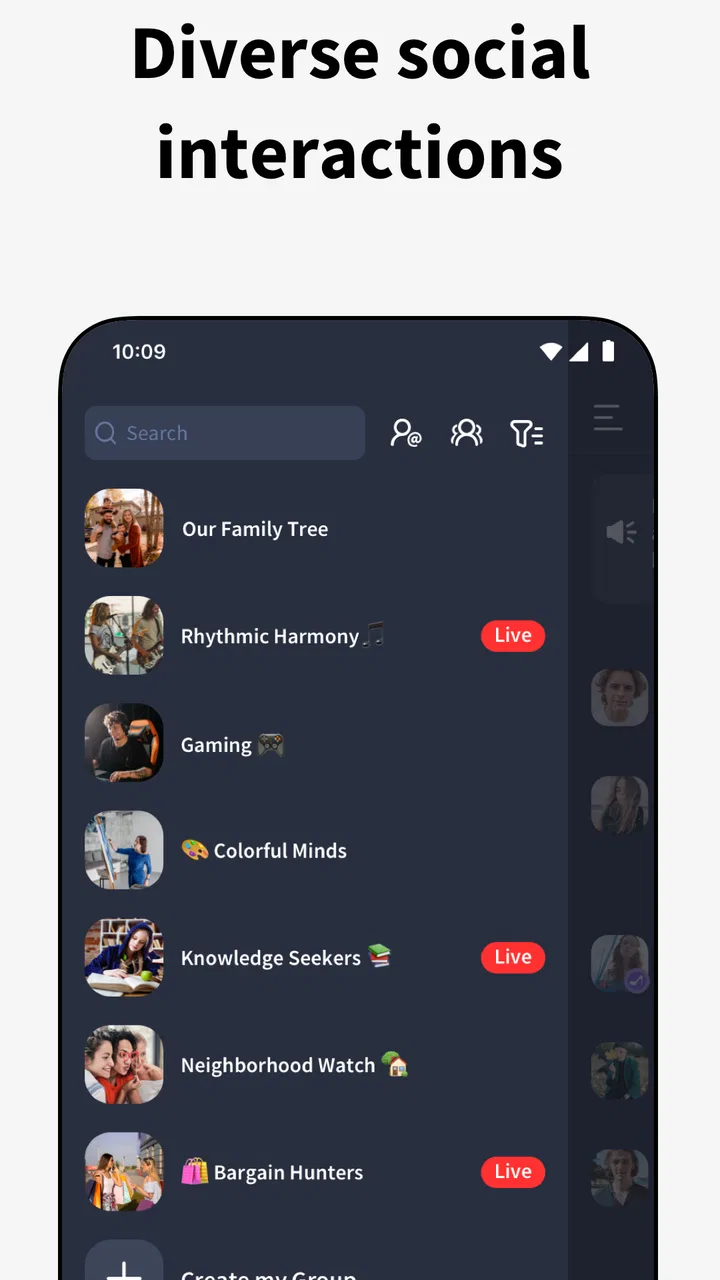
Fambase: Live & Group Chat is a social communication app designed for joining live conversations, participating in group chats, and interacting with online communities. After exploring the app, I found that its main focus is real-time social engagement rather than private messaging alone. Users can discover rooms or groups, follow conversations, send messages, and take part in live interactions based on their interests.
02Do I need an account to use Fambase: Live & Group Chat?
Yes, users generally need to create or sign in to an account before accessing the app’s main social features. Registration allows Fambase to connect your profile with group memberships, chats, and live activities. Depending on the sign-in options available on your device, you may be able to register using an email address, phone number, or supported third-party account. Always review the information requested during registration.
03Is Fambase: Live & Group Chat safe for children and teenagers?
Parents should review Fambase carefully before allowing a child or teenager to use it. Live chats and public groups can include messages, profiles, or conversations created by strangers, and the content may not always be suitable for younger users. I recommend checking the app’s age rating, privacy settings, reporting tools, and community guidelines, while also enabling device-level parental controls and discussing safe online behavior.
04Does Fambase: Live & Group Chat offer private messaging and moderation tools?
The app is primarily built around group and live communication, but available messaging options can vary depending on the community or account features. Users should look for privacy controls that manage who can contact them, invite them to groups, or view their activity. Reporting and blocking tools are especially important in social apps, so it is worth learning how to use them before actively joining public conversations.
05Is Fambase: Live & Group Chat free to download and use?
Fambase: Live & Group Chat can generally be downloaded without an upfront purchase, although some features may depend on in-app purchases, subscriptions, virtual items, or other optional payments. The exact pricing and available features may change by platform, region, or app version. Before spending money, check the store listing and in-app purchase information, and review whether recurring subscriptions are included.
Pros
- Live rooms make conversations feel more interactive than standard messaging.
- Group chats help users connect around shared interests and communities.
- The app supports casual social discovery through live conversations.
- Useful for staying engaged with friends or creators in real time.
- A social format that suits users who prefer chatting over posting content.
Cons
- Busy live rooms can become noisy or difficult to follow.
- Some communities may have limited activity depending on the time of day.
- Public conversations may expose users to unwanted messages or behavior.
- The experience can encourage frequent notifications and screen time.
- Privacy settings should be reviewed carefully before joining public groups.

Fambase: Live & Group Chat
Gallery